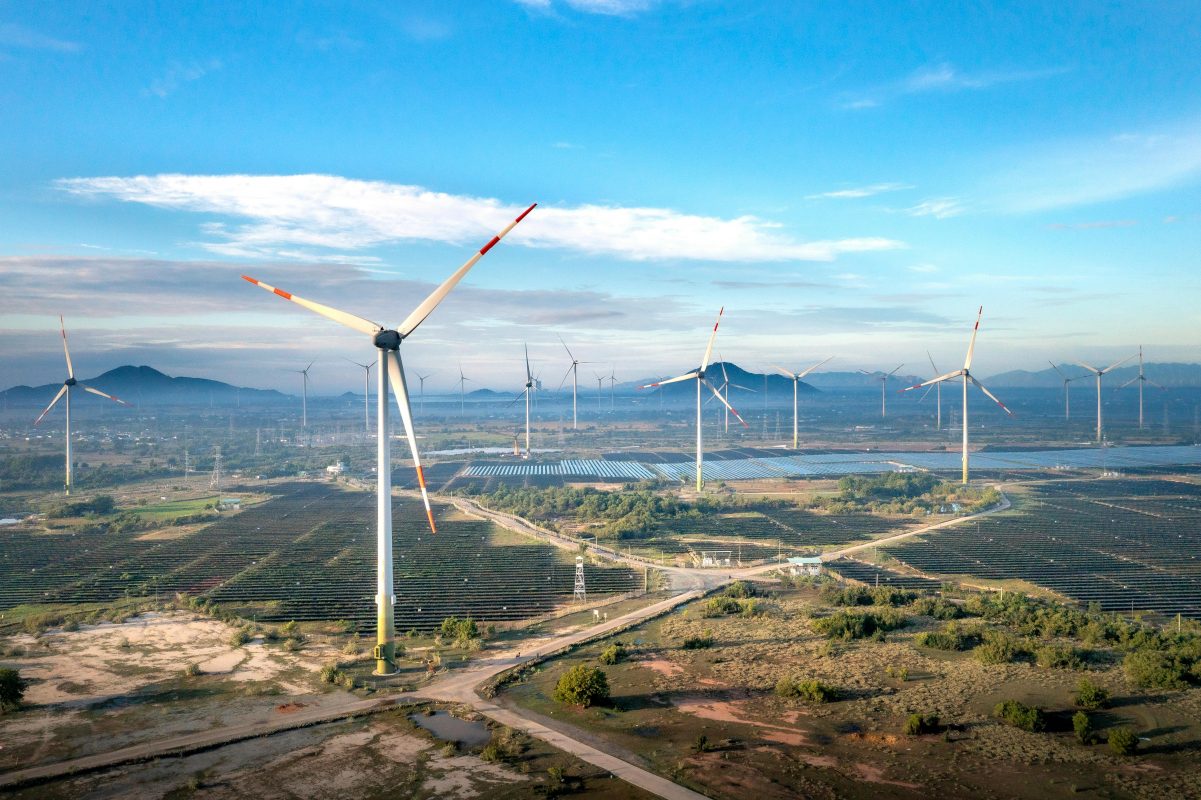
China has achieved one of the most extraordinary milestones in the history of renewable energy in 2025. According to data published by the Global Wind Energy Council (GWEC) According to its annual report, the global wind industry installed a record 165 gigawatts (GW) of new capacity last year, a 401% increase over 2024—the largest annual increase on record.
The undisputed protagonist of this achievement is China. Of that global total, China alone contributed 120.5 GW of new wind power capacity, which is equivalent to practically three out of every four megawatts installed on the planet during 2025 being Chinese. With this figure, the cumulative wind power capacity of the Asian giant reaches 640.5 GW, out of a global total of 1,299 GW. An unprecedented demonstration of industrial planning and political will sustained over decades.
This progress is not the result of chance, but of a coherent and ambitious national strategy. The growth in wind power capacity was driven by strong demand for new onshore wind energy, which grew by 421% to 155.3 GW, while offshore wind increased by 181% to 9 GW. China’s commitment to clean energy is part of its long-term climate goals: to peak CO₂ emissions before 2030 and achieve carbon neutrality before 2060—known as the «30-60» targets.
Progress is moving so quickly that China is exceeding its own projections. By 2024, the combined installed capacity of wind and solar power had already reached 1,400 GW, surpassing ahead of schedule the 1,200 GW target set for 2030. Furthermore, as of February 2026, China’s clean electricity capacity had reached 521 TWh, surpassing fossil fuel-based electricity generation for the first time.
China’s commitment to wind power also has a global industrial dimension of enormous significance. China is the manufacturing powerhouse of the global energy transition supply chain, producing more than 60% of the world’s wind turbines. This manufacturing capacity not only drives its own energy transition but also lowers the cost of renewable energy for the rest of the world, accelerating global decarbonization.
The outlook for the coming years is equally encouraging. The GWEC projects that 969 GW of new wind capacity will be added worldwide between 2026 and 2030, with an average of 194 GW annually, and growth is expected to progressively extend to emerging markets in Southeast Asia, Central Asia, and the Middle East. China, once again, will lead this process, consolidating its role as a driver and benchmark for the global energy transition.
 Español
  简体中文
简体中文  English